Money and stable economy guide
Horsey Game Money Making Guide: Races, Bets & Safe Income
Build a repeatable cash loop before extreme DNA builds. Compare races, bets, horse sales, fallback work, and spending without emptying your stable.

Quick answer
What is the safest way to make money in Horsey Game?
For Horsey Game money making, keep a reserve and test one controllable horse in the cheapest race. A repeatable race win usually teaches you more and pays more than selling every horse or making a large bet before you understand the field. Keep enough cash for food, tools, and one failed experiment.
Community economy guides commonly describe a small starting bankroll, a low-cost regular race, and a much larger win payout. Treat those figures as route examples rather than permanent guarantees: prices, payouts, and balance can change. The important pattern is the same-event test, a clear win condition, and a reserve that keeps the next attempt possible.
Start small
Protect the starting cash and use every free resource
Your first money decision is often a spending decision. Do not turn a small starting balance into a full stable of tools, food, and untested horses. Keep a visible reserve for the next race entry and for the item that fixes the current problem. A reserve makes it easier to learn because one failed run does not force a restart.
The opening loop should use what the game already gives you: basic feed, the truck and trailer, and wild horses that can be captured instead of purchased. Explore with a purpose, bring back only animals that help a plan, and avoid filling the trailer with projects you cannot test. Free inputs are valuable because they reduce the cash cost of learning movement and body control.
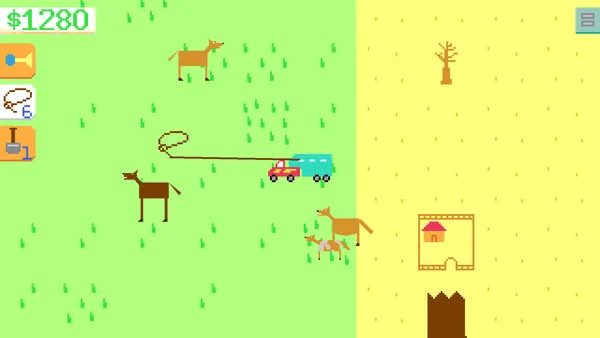
- Keep a reserve: Save enough for the next race, food, and one recovery action before buying a novelty tool.
- Use free inputs: Capture and test wild horses before spending heavily on a horse that has no known role.
Core income
Use racing as a measured income loop
Horsey Game money making works best when you can repeat one event with the same kind of horse. Begin with an affordable event and a rested, controllable horse. Watch the full run rather than only the opening burst: a horse that stays upright, recovers after contact, and finishes consistently is a better earner than a spectacular one-run build.
Several community guides use a regular race example of a low entry fee and a much larger first-place prize. The exact figures should be checked in the current build, but the decision rule is stable: calculate the payout after the fee, then ask how often you can finish well enough to justify the risk. A route that wins once and fails twice is not a reliable income loop.
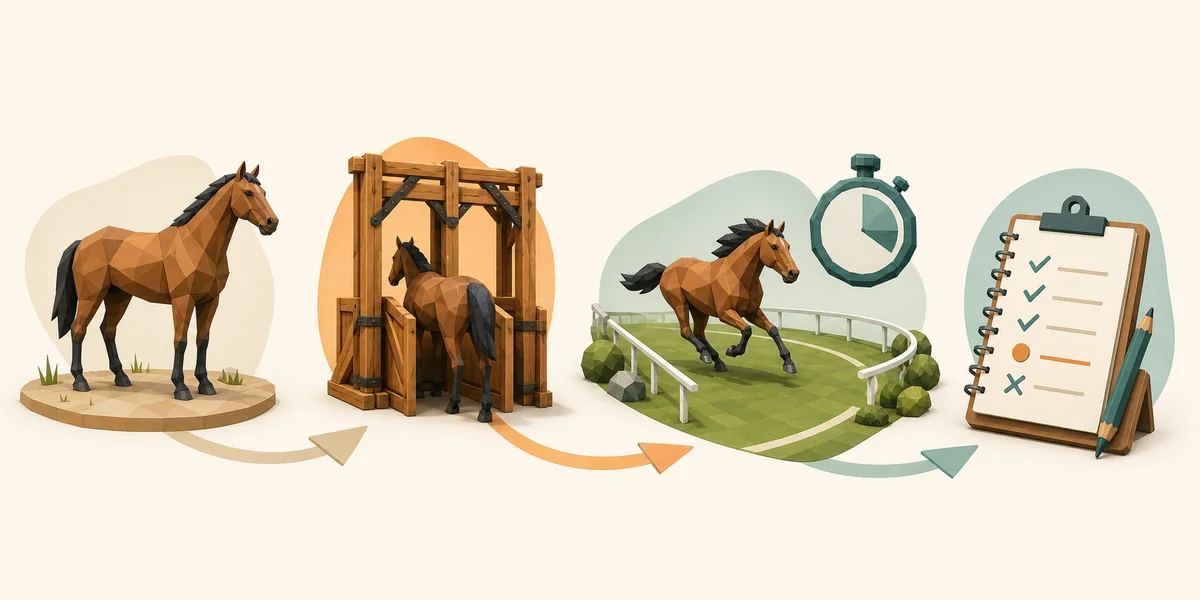
- Fix the test: Use the same event, a rested state, and a comparable starting setup for each money comparison.
- Track net result: Write down entry cost, payout, first failure, and recovery instead of recording only the prize.
Risk boundary
Treat betting as a supplement, not your only bank
Betting can grow a bankroll quickly, but it can also turn a small mistake into a reset. Learn the race context first: observe the field, compare horses you understand, and keep the stake small enough that a loss does not remove your next action. Betting should use surplus cash after the stable has food, tools, and a reliable route.
A practical test is to record the odds, stake, result, and net change over several comparable bets. Do not call a method profitable from one win. A favorite may be safer than a long shot, but safer does not mean certain, and a large stake magnifies every unknown about fatigue, route fit, or a horse you have not watched.
- Observe first: Watch enough races to understand the local field before trusting an odds label.
- Stake a fraction: Keep any single bet small enough that a loss leaves the next race and feed budget intact.
Recovery income
Use fallback work, sales, and cleanup when a run goes wrong
Fallback income is useful because it prevents one failed project from becoming a dead end. Community walkthroughs mention small chores, paddock work, and cleanup activities as ways to rebuild a bank when racing is temporarily too expensive. These activities may be slower, but they convert time and an existing stable state into the next entry fee.
Selling or sending a failed horse to a disposal or glue route can recover some value, especially when the animal no longer fits your plan. Treat the payout as cleanup money, not a reason to discard every imperfect horse. A weak racer may still carry a trait, body shape, or quest role that makes it worth keeping in a separate slot.
- Recover deliberately: Use chores or cleanup only to restore the next useful action, not as a reason to abandon your route.
- Keep valuable flaws: An imperfect horse can still be a breeder, quest asset, or future experiment.
Money management
Protect cash with a reserve-first spending plan
A good money making guide also explains what not to buy. Keep the stable supplied before you purchase a cosmetic item, a risky tool, or a DNA change that does not solve a current problem. Split your balance into three mental envelopes: operating cash for food and entry fees, test cash for one controlled experiment, and protected cash that you do not touch until the next stable milestone.
Use the save-file guide when a purchase, mod, or genetics experiment could change a useful baseline. A dated backup lets you compare the new result without pretending that a lucky improvement is permanent. It also keeps a failed money plan from becoming a save-recovery problem.
- Operating cash: Reserve the next food, tool, and entry costs before experimenting.
- Test cash: Spend only what you can lose while keeping your reliable horse and route intact.
Staged route
Follow a staged route from first dollars to a stable bankroll
For Horsey Game money making, phase one is survival: use free resources and test an affordable race with a normal horse. Phase two begins when the reserve covers several attempts. At that point, keep a dependable racer, sell or clean up projects that have no role, and add a small breeding or betting test without replacing your core income.
Phase three is specialization. Choose whether the stable needs a stronger race horse, a heavier challenge build, a breeding line, or a route that produces a particular item or reward. Measure net income and failure cost together. A route that pays more but consumes every tool and recovery action may be worse for your actual bankroll.
- Phase 1: survive: Keep a reserve, use free inputs, and test the cheapest repeatable activity.
- Phase 2: stabilize: Add one proven racer, one cleanup route, and one small experiment.
Reference table
Horsey Game income methods and trade-offs
Compare the trade-offs; confirm live fees and payouts in your current game build.
| Method | Best use | Risk | What to record |
|---|---|---|---|
| Regular racing | Build a repeatable early income loop | Entry fee and horse failure | Fee, payout, finish, first failure |
| Championship racing | Scale a proven horse and bankroll | Higher fee and preparation cost | Tier, win rate, net result |
| Conservative betting | Use observed race knowledge | Stake can disappear | Odds, stake, result, net change |
| Chores or paddock work | Recover when cash is low | Slow time return | Time spent and next useful action |
| Horse sales or cleanup | Recover value from failed projects | Selling a useful specialist | Role, test result, payout |
| Breeding and selling | Turn evaluated traits into stable value | Food, space, and test cost | Parents, trait, result, sale value |
Workflow
A repeatable Horsey Game money workflow
- Set the reserve Keep the next entry fee, food, and one recovery action untouched.
- Choose one method Pick racing, betting, chores, cleanup, or breeding and write the question you are testing.
- Run comparable attempts Use the same event, horse state, and conditions for several results.
- Record net income Subtract entry fees, stakes, tools, and failed attempts from the visible payout.
- Promote or roll back Keep a route only when it repeats; restore the baseline when the result is luck or too expensive.
FAQ
Horsey Game money making questions
Sources checked
Economy references and official context
- Official Horsey Game page on Steam - Use the official listing for game identity, platform, purchase, and update context; this fan wiki does not host game files.
- Horsey Game money making guide - Community reference checked for income categories, starting resources, and example route structure. Values can change.
- Horsey Game beginner walkthrough - Community cross-check for race fees, payouts, chores, betting, and cleanup loops; verify live values in your build.
- Horsey Game racing guide - Internal guide for speed, stamina, balance, and repeatable race tests.