DNA & CRISPR Guide
Horsey Game DNA Codes Guide: How to Read, Edit, and Test Builds
Decode Horsey Game DNA before you paste a risky CRISPR string. This guide explains helix groups, safer test edits, build goals, common broken-code symptoms, and when to stop before you ruin a useful stable line.
Quick Answer
What are Horsey Game DNA codes?
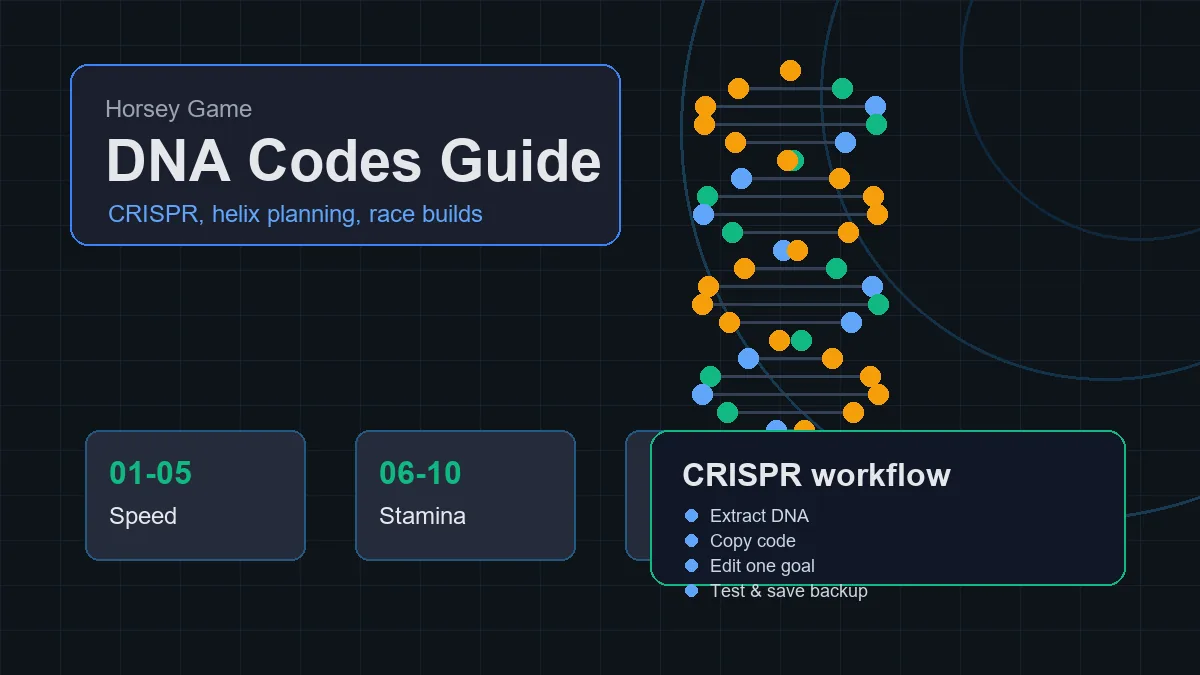
Horsey Game DNA codes are best treated as build recipes, not cheat codes. Copy the current sequence, change one meaningful helix group at a time, and test the result in a low-risk horse before moving the pattern into your main stable.
For searchers looking for Horsey Game DNA codes, the safest answer is to use codes as examples for speed, body shape, durability, or novelty traits, then keep notes on which edit produced which visible result. Random full-string swaps can create unstable horses that are harder to breed, race, or evaluate.
If you searched for a Horsey Game CRISPR guide, treat the CRISPR lab as a controlled gene-editing workflow: preserve a clean DNA baseline, change one helix group, and compare the result with an unedited horse before moving the build into your main stable.
Format
How to read a DNA code before editing it
Most shared Horsey Game DNA codes look intimidating because they compress many decisions into a long text block. Read them in layers: first confirm the code has a complete set of helix lines, then check whether both strands are present, then look for repeated or identical lines that may be intentional. Do not assume a duplicated helix is a mistake just because it looks unusual.
A useful code should also include context. Ask what the creator tested, which event it was built for, and whether it needs a special body type, age state, or CRISPR setup. A fastest-horse code without terrain notes can still fail if the body shape clips, stumbles, or drains stamina too quickly.
Treat shared DNA codes as experiment inputs, not guaranteed recipes. Record the original genome, edited segment, horse role, and post-reload result.
- Keep the raw copy: Store the original code before every edit so you can recover a working horse.
- Check completeness: A missing strand or malformed line can make troubleshooting harder than the actual build.
- Use one goal: Do not tune for speed, size, novelty, and stability in the same first pass.
Planning
Choose the build goal before you touch CRISPR
CRISPR becomes clearer when the build has a job. A race build needs speed, stamina, and movement that remains controllable over the whole route. A sumo build wants mass, strength, and a body that can keep pressure on contact. A circus or trick build may value jump behavior, agility, or odd proportions more than clean race pace.
This goal-first method prevents the common beginner mistake: copying the strangest code, spending money on edits, and then discovering the creature is funny but unusable. Novelty builds are part of the fun, but they should be separated from the horses that earn money or carry valuable breeding traits.
- Race winner: Prioritize speed plus stride control, not speed alone.
- Sumo pusher: Prioritize mass, balance, and force through contact.
- Novelty hybrid: Back up useful horses before chasing unusual body plans.
Testing
How to test DNA changes without losing progress
The best test is a controlled comparison. Run the horse before editing, record the event and failure pattern, make one focused change, then run the same event again. If you changed several helixes and the horse improves, you still may not know which edit helped. If it gets worse, you have even less information.
Use backups aggressively. Keep a stable racer, a breeding copy, and an experimental copy when possible. The experimental copy is where you paste community DNA, merge strands, or try extreme edits. The breeding copy is where you preserve traits that may matter later, even if the current race result is not impressive.
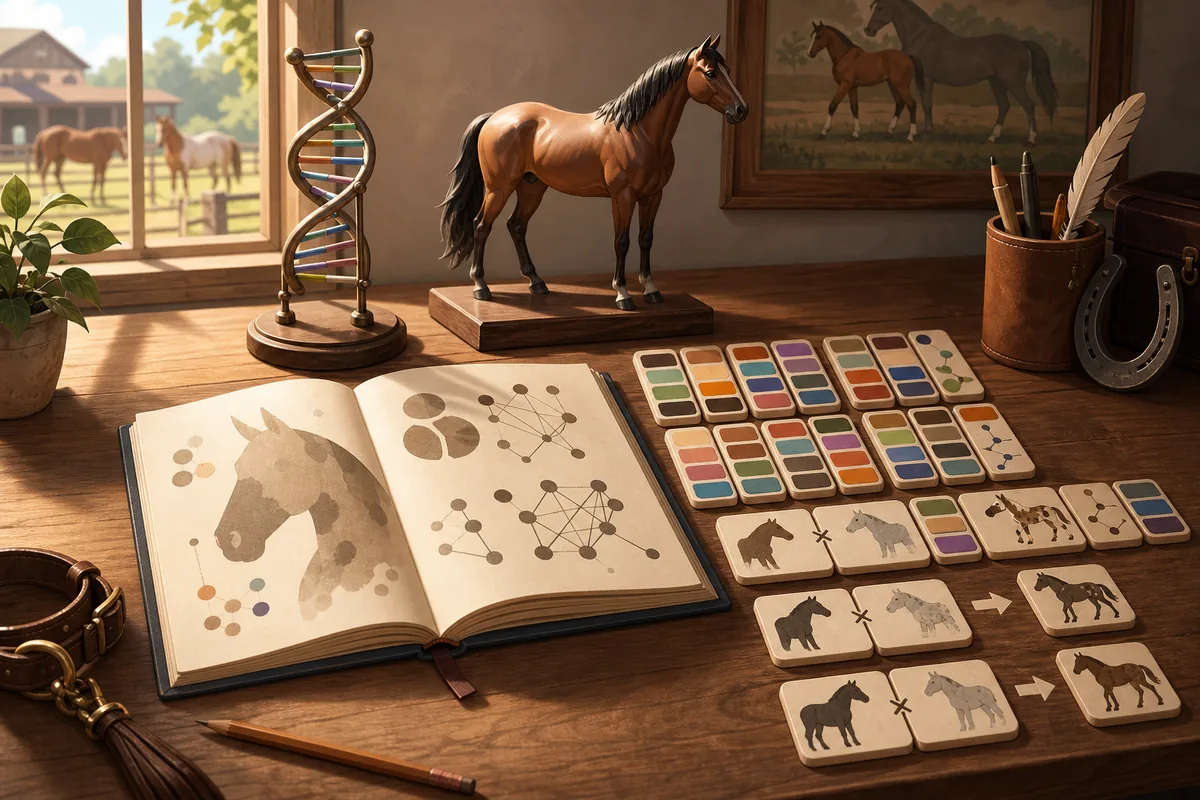
When you copy a community DNA code, add a short note beside it before testing: where it came from, what event it claims to solve, what creature received it, and what you changed afterward. This turns a raw code into a reusable experiment log instead of a mystery string.
If a code performs well, keep the exact version that worked and create a separate branch for new edits. The moment you overwrite a successful branch without notes, you lose the ability to compare future builds against a proven baseline.
Current SERP checks show players often look for full 20-helix presets and fastest-horse DNA strings. Use those samples as comparison material, not as final proof. A copied code still needs the same baseline race, the same horse state, and the same event route before you can say it is better than your own build.
At the CRISPR lab, record the original sequence, the edited helix group, the receiving horse, and the test result. This gene-editing log keeps a useful DNA code separate from a generic cheat claim and makes rollback possible.
- Record the baseline: Write down whether the horse lost from speed, stamina, balance, or route handling.
- Change less: Small edits make the cause of improvement easier to identify.
- Test the right event: A good circus performer may be a bad racing horse, and that is not a failure.
- CRISPR lab: Use the CRISPR lab to test one gene-editing change at a time and keep a clean rollback copy.
Pitfalls
Common DNA code mistakes to avoid
Do not paste a code just because a video calls it the fastest. The same code can behave differently depending on how you apply it, what creature receives it, and whether the goal is a short race, a money loop, or a challenge route. Community codes are starting points, not guaranteed world records.
Also avoid relying on a single super horse. Horsey Game rewards a deeper stable because fatigue, aging, breeding choices, and event variety all change what useful means. A horse that is not your best racer can still be a good gene donor or a strong backup for a different challenge.
- No blind overwrites: Never paste over your only reliable horse without an untouched backup.
- No single metric: Raw speed is not enough if the body cannot stay upright.
- No stale assumptions: Community findings can change as players test more builds.
Troubleshooting
Why a Horsey Game DNA Code Fails
Most failed CRISPR edits come from changing too many letters at once, pasting a sequence from a different build goal, or testing a code on a horse whose base traits already fight the intended result. When a horse becomes slower, too heavy, or visually strange in a bad way, roll back to the saved sequence and isolate the last edited helix group.
If the game rejects a code, check for missing characters, accidental spaces, copied punctuation, or a mixed-case segment from notes. If the code applies but the result is weak, the issue is usually build fit rather than a typo: racing builds, sumo builds, and novelty bodies need different tradeoffs.
If a pasted code came from a community genome tool or Steam guide, compare the claimed goal with your test. Racing optimization, cloning, cure-related edits, and novelty bodies can all use DNA, but they do not share the same success metric.
- Rejected code: Clean the copied string and compare its length with the original sequence before editing again.
- Bad stats: Undo the newest helix change first; do not replace the entire genome unless you documented the previous version.
- Odd body result: Move the test to a spare horse so your main breeding line stays readable.
Reference
DNA build goals and what to watch
Use this table as a boundary map for DNA-code intent. It keeps racing, sumo, breeding, and novelty experiments from stealing each other's optimization goals.
| Build goal | Likely priority | How to judge success |
|---|---|---|
| Racing starter | Leg balance, weight control, stamina-friendly edits | Use when you need a stable first competition horse |
| Sumo body | Mass, push stability, durability, controlled speed loss | Use for arena-style builds where size matters |
| Breeding test | One visible trait and one performance trait per generation | Use when documenting inheritance without losing the family line |
| Novelty creature | Unusual body shapes, colors, or proportions | Use only after saving a practical baseline code |
Workflow
Safe CRISPR workflow for DNA codes
- Save the original DNA Copy the full sequence into notes before touching CRISPR so every failed experiment has a rollback point.
- Pick one build goal Choose racing, sumo, breeding, or novelty before editing; mixed goals make results hard to read.
- Edit one helix group Change a small segment, test it, and write down the visible and stat changes.
- Retest after one race or breeding check Do not judge a code only from appearance; confirm whether the horse still performs its intended role.
- Promote only stable results Move the edited code into your main stable only when it improves the target without breaking another important trait.
FAQ
Horsey Game DNA Codes FAQ
Sources
Sources and SERP notes
- Official Steam page for Horsey Game - used for platform, developer, release, and official purchase context.
- Horsey Game CRISPR Lab Tutorial - reviewed for common SERP coverage around helixes, CRISPR steps, and build goals.
- Horsey Game Wiki on Fandom - used as a community wiki reference point for page intent and related topic coverage.