Fossil and discovery guide
Fossils Horsey Game Guide: Find, Check, and Use Fossils
Verify fossil clues safely; keep DNA codes and save files separate.
Quick answer
What should you do with a fossil in Horsey Game?
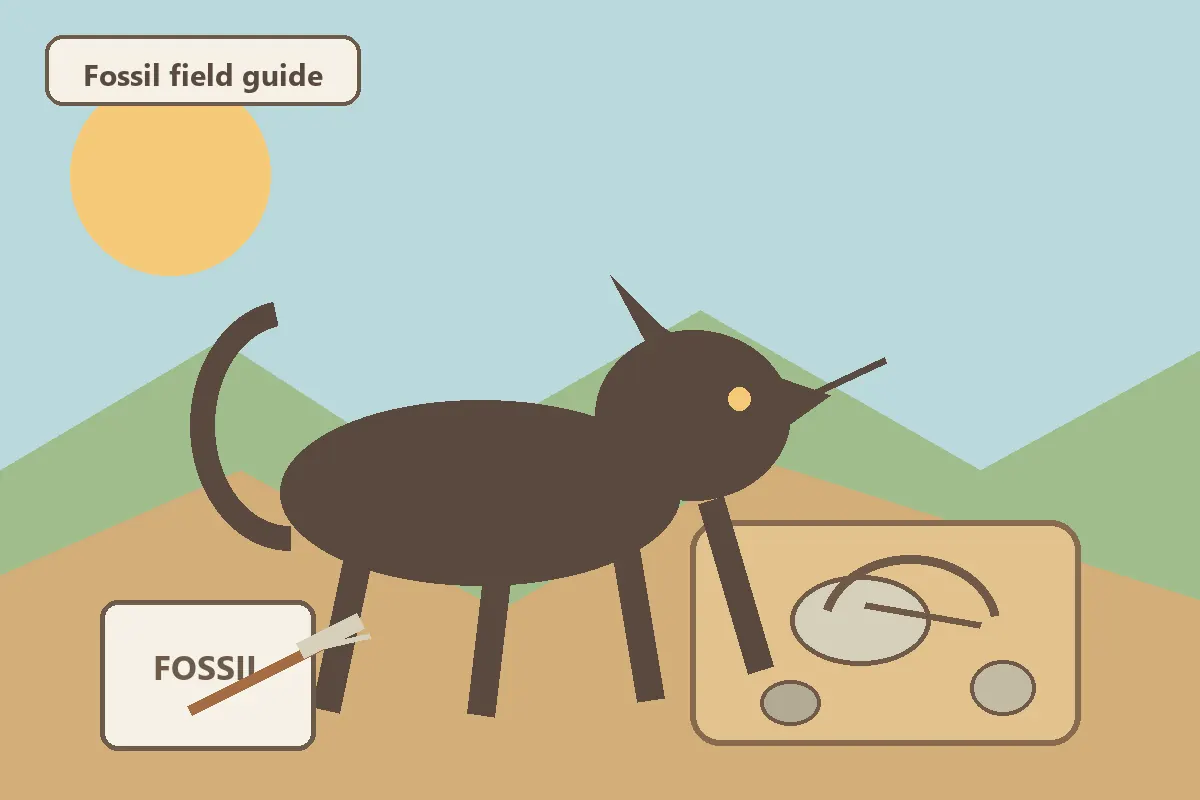
If you searched for fossils Horsey Game, begin by treating the fossil as an investigation clue rather than a guaranteed item recipe. Record where you saw it, what nearby object or creature was present, and whether the game displayed an interaction prompt. The exact next action can depend on the build, the area, and what the player has already unlocked.
The safest first move is to check the current inventory, collection, ranch, or nearby interaction point without spending a valuable DNA edit or overwriting a useful horse. A fossil is not automatically a Horsey Game DNA code, not a normal save-file backup, and not proof that one community location works for every player. Keep those search intents separate.
When a fossil seems connected to a creature or genetics question, use it to form a testable hypothesis: identify the clue, confirm the context, try one reversible interaction, and write down the result. If nothing changes, preserve the original state and investigate the nearby objective before assuming the fossil is broken or that an unofficial download is required.
Meaning
What fossils mean in Horsey Game
The phrase fossil Horsey Game can describe several kinds of player question: where a fossil appears, what a fossil is for, whether a fossil can be used with a creature, or whether a fossil is part of a larger genetics experiment. Those questions sound similar in search, but they do not always have the same in-game answer. Start with the visible clue instead of jumping to a single universal solution.
A useful distinction is between an object clue and a confirmed mechanic. An object clue is something you found or saw in a screenshot. A confirmed mechanic is an action that the current game build accepts and repeats under the same conditions. Community posts can help you find ideas, but a post that shows a fossil near a horse does not by itself prove that every fossil has a transformation, breeding, or DNA function.
Finding
Where to start when searching for a Horsey Game fossil
Start from the place where the clue was reported, but do not assume a screenshot is a complete map. Check the area name, time or creature state if visible, and the route you took to reach the object. If the game has an interaction prompt, approach from a slightly different angle and wait for the prompt to finish before moving away. Small physics-based interactions can be easy to miss when the horse is standing on top of the object.
If you are following a community clue, compare the clue with your own game state. Ask whether you have completed the nearby objective, unlocked the same area, brought the same kind of creature, or loaded the same type of save. A fossil that appears after a progression step may look absent when the real problem is that the trigger has not been met yet.
Inspection
How to check a fossil before spending resources
Once you reach the fossil clue, inspect the cheapest reversible action first. Look for a collect, examine, carry, store, or context prompt. If the item enters an inventory or collection list, capture its exact name and any description. If it only changes the scene or triggers a nearby response, write down the sequence rather than assuming the fossil itself is a consumable resource.
Use a spare horse, duplicate save, or low-risk test state for any experiment that could affect breeding or DNA work. The goal is not to prove a dramatic theory in one attempt. The goal is to learn whether the fossil changes a creature, unlocks a recipe, supplies a clue, or simply marks a place in the world. One controlled test tells you more than several changes made at once.
If the game offers no prompt, do not immediately download a mod, a save editor, or a file claiming to unlock fossils. Unofficial files can change the question from gameplay help to save recovery and security risk. First reload the clean state, revisit the route, check whether a nearby task is unfinished, and compare the result with an official update or the game's own current behavior.
Genetics boundary
How fossils relate to DNA, breeding, and creature experiments
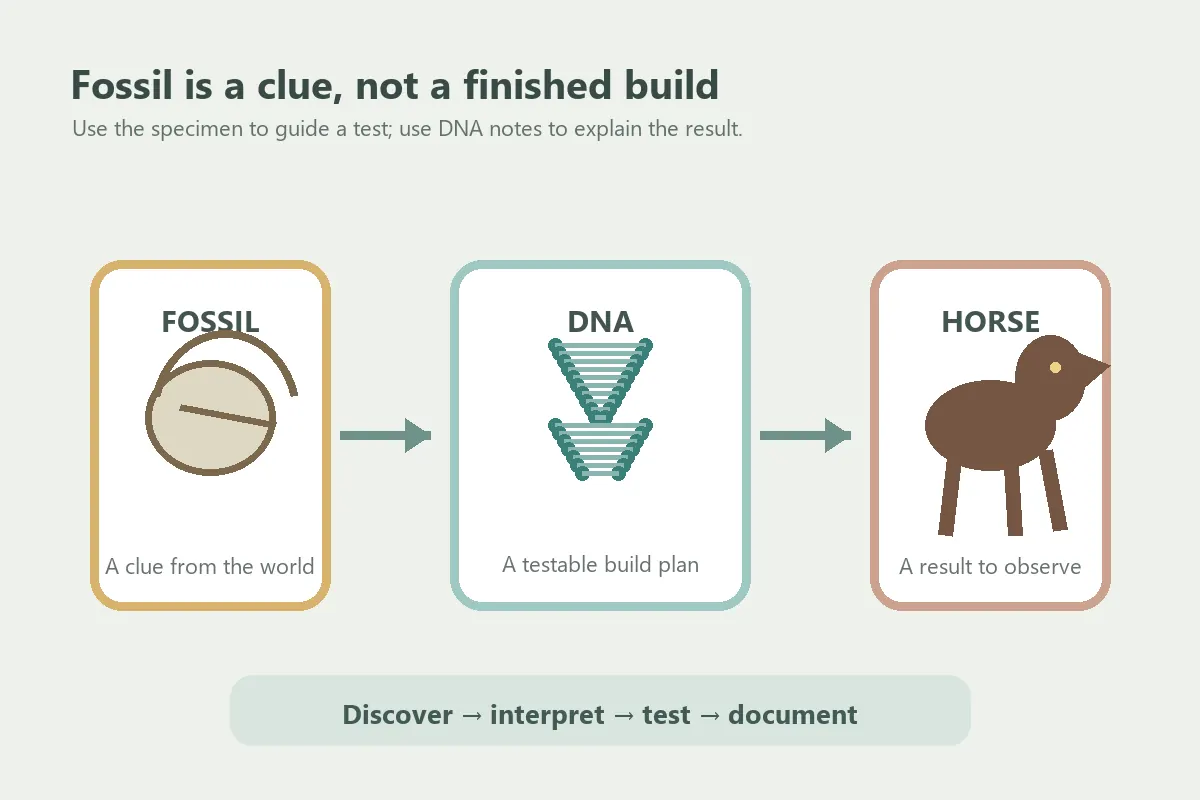
Fossils and DNA belong to different evidence layers. A fossil may inspire a creature or genetics theory, while DNA codes and CRISPR describe the editable genome workflow. Do not paste a random string because a fossil clue looks unusual, and do not treat a community fossil report as proof of a universal genome recipe. Keep the discovery note and the DNA experiment in separate records.
A clean experiment log can contain four lines: the fossil clue, the creature or horse tested, the exact interaction or edit, and the result after reload or a repeatable event. This structure helps you see whether the fossil affected appearance, movement, breeding value, a local objective, or nothing at all. It also gives other players enough context to reproduce the useful part without copying an unsafe assumption.
Troubleshooting
Why nothing happens when you find a fossil
The most common explanation is a context mismatch. The clue may depend on an area unlock, a nearby objective, a creature state, a prompt angle, or a progression step that is not yet complete. Before changing files or searching for a hidden code, reload the clean state, repeat the route, and check the surrounding task in the order the game presents it.
Another possibility is that the screenshot or phrase refers to a different object. A fossil-shaped prop, a collectible, a creature clue, and a DNA experiment can share the same search words. Compare the exact color, location, interaction text, and result. If the only evidence is a cropped image with no repeatable action, keep the conclusion cautious and avoid publishing it as a guaranteed solution.
Editorial workflow
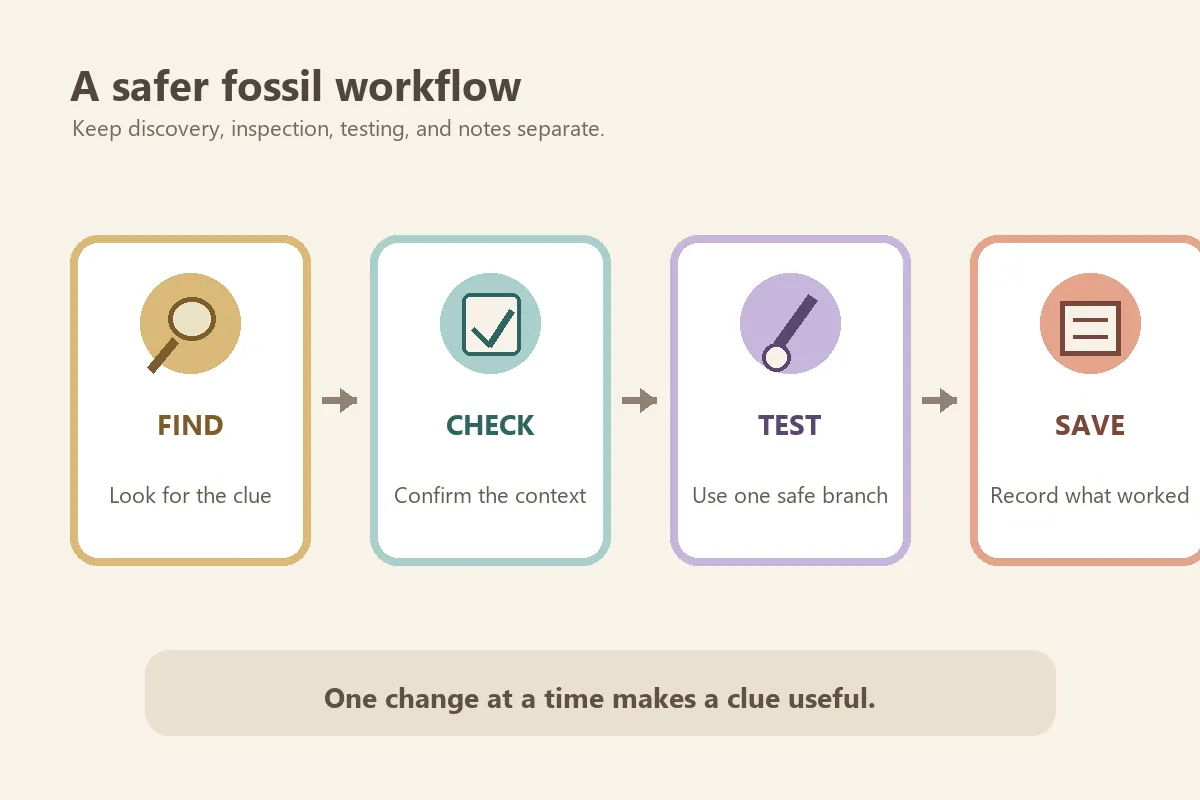
A four-step fossil investigation
This compact process keeps a useful discovery separate from a guess, a DNA edit, or an unsafe download.
If a step cannot be repeated, label it as a community clue rather than a guaranteed mechanic.
Boundary map
Fossil questions and the right evidence
Use this table to route your question to the right kind of check. It prevents a fossil discovery from being mixed with DNA codes, breeding advice, or save-file recovery.
| Question type | Best first check | Do not assume |
|---|---|---|
| Where is the fossil? | Verify landmarks, route, unlocks, and the interaction angle. | A cropped screenshot is a universal coordinate map. |
| What does the fossil do? | Read the prompt, inventory entry, or repeatable scene response. | Every fossil is a consumable or a transformation trigger. |
| Can it affect a creature? | Use a spare state and compare one controlled test. | A community theory is the same as an official mechanic. |
| Is it a DNA code? | Keep the fossil note and genome note separate. | An unusual object makes a random code safe to paste. |
| Is the item missing? | Check progression, reload cleanly, and preserve the save. | An unknown download is the required fix. |
Step-by-step
How to investigate fossils without losing progress
- Write down the clue Note the object name, area, nearby creature, visible prompt, and what you were doing immediately before finding it.
- Check the current state Confirm that the area, objective, inventory, and creature state match the report you are following.
- Use the smallest action Try examine, collect, store, or the displayed interaction before spending DNA resources or changing a valuable horse.
- Repeat once Reload or use a comparable test state and repeat the same sequence so a one-off physics event does not become a false rule.
- Promote only verified results Keep a stable baseline, then move a confirmed discovery into your normal guide or breeding notes with the source and date attached.
FAQ
Fossils Horsey Game FAQ
Sources
Sources and evidence boundaries
- Official Horsey Game getting-started guide - Used for the official game context and to keep general gameplay guidance separate from unverified fossil claims.
- Official Horsey Game CRISPR tutorial - Used to keep DNA and CRISPR terminology separate from the fossil discovery workflow.
- Horsey Game on Steam - Official purchase and platform context; this site does not provide unofficial game files.
- Community Horsey Game discussions - Community reports can suggest a clue or test route, but they are not treated as universal mechanics without repeatable evidence.