Creature and breeding guide
Dino Horsey Game Guide: What to Check Before You Build Around It
Dino searches are not the same as broad DNA-code searches. This guide explains how to treat Dino as a creature-specific Horsey Game topic: discovery clues, feeding and water checks, breeding value, CRISPR testing, and safe boundaries around unofficial downloads.
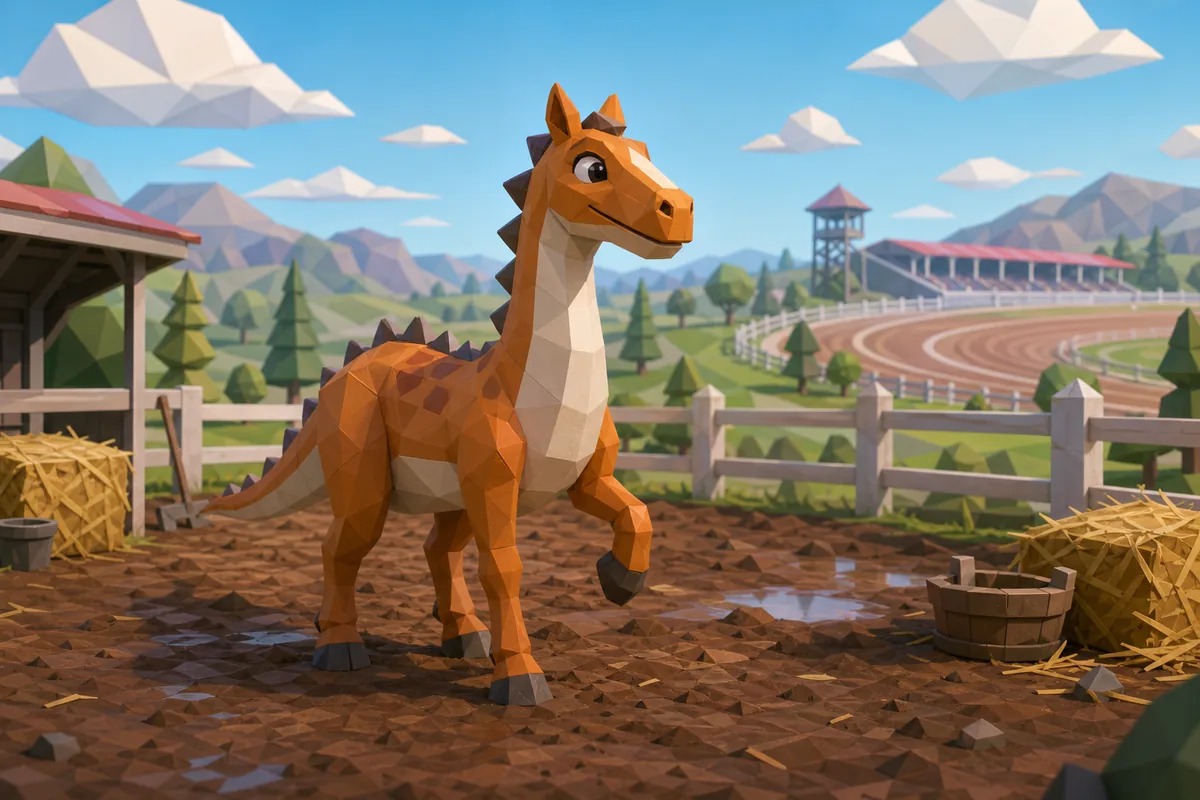
Fast answer
Dino is a creature-specific clue, not a new download or magic DNA code
If you searched for Dino Horsey Game, treat the question as an in-game creature and build-planning problem first. Check where the Dino clue came from, whether the animal behaves like a normal horse, what food or water context is active, and whether the creature is useful for racing, breeding, novelty, or a special challenge.
Do not solve a Dino question by installing a different build, chasing a SteamRip mirror, or pasting random DNA strings. Use the official Steam version, keep a baseline save or stable note, and test Dino-related changes one variable at a time.
Search intent
What players usually mean by “Dino Horsey Game”
Similarweb related-keyword data surfaces “dino horsey game” as a distinct low-difficulty long-tail query, while GSC shows the live site already has separate intent for DNA codes, Steam/download safety, meat, racing issues, and the general wiki hub. That makes Dino a better fit for a focused creature guide than for another broad DNA-code page.
Most Dino searches come from players who saw a dinosaur-like creature, a community wiki entry, a strange breeding result, or a discussion about unusual animal behavior. The practical answer is to identify what system the question belongs to: discovery, feeding, movement, water limits, breeding inheritance, or CRISPR experimentation.
- Creature intent: The player wants to understand a Dino-like animal rather than the whole game.
- Build intent: The player may be judging whether Dino traits are useful for racing, sumo, novelty, or breeding.
- Care intent: The question may involve food, water, location, or creature state instead of DNA codes.
- Safety intent: Dino does not justify unofficial downloads, APK mirrors, or cracked installers.
Discovery checks
Where to look before assuming Dino is missing
Start from the clue that made you search. Was it a community page, a stable result, a ranch prompt, a creature silhouette, or a video? Then return to the closest in-game context instead of trying every system at once. Horsey Game rewards careful observation because animal state, location, age, objective text, and available resources can change what an interaction means.
If you are trying to document Dino for your own stable, create a short note before testing: where you saw it, which animal was active, what the inventory contained, whether water was nearby, and what changed after one interaction. This prevents the common mistake of mixing discovery, feeding, and breeding tests into one confusing session.
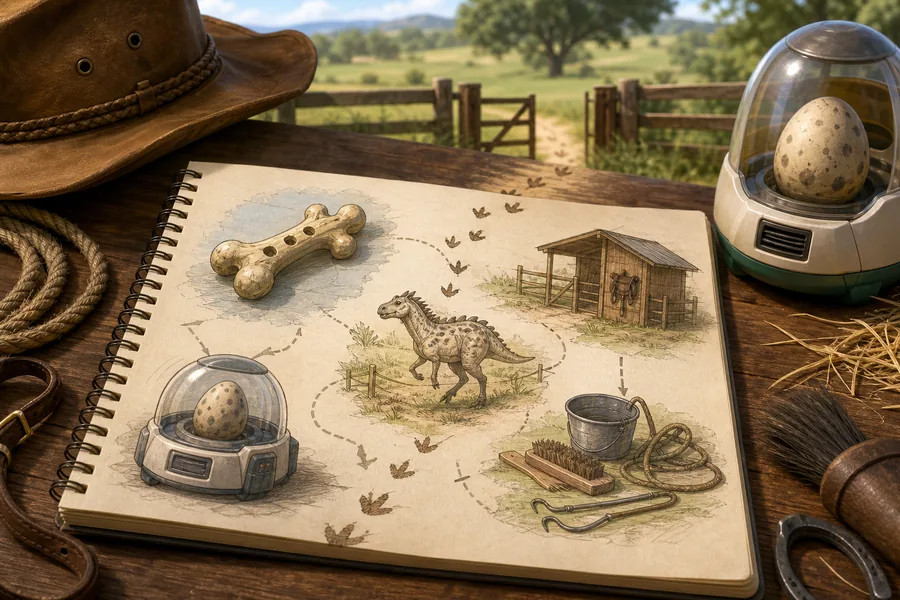
- Check the source clue: A wiki note, video, or player comment should be verified against your current version and save context.
- Return to the ranch: Use the ranch, pen, shop, water, or marker connected to the clue before changing systems.
- Use one test at a time: One food, one location, one animal, and one result is easier to interpret.
- Separate rumor from proof: A cool screenshot does not prove the same route works in every version or stable state.
Care logic
Feeding, water, meat, and Dino state checks
A Dino-like creature should not automatically be treated like a standard race horse. If an interaction fails, check the boring causes first: wrong animal, wrong location, inactive prompt, tired or unavailable state, missing previous objective, or an item in the wrong context. If the question involves meat, use it as a possible feeding clue, not as proof that every Dino interaction is carnivorous.
Water and environment checks matter because creature behavior can be tied to location. If the Dino appears near a ranch, pond, pen, or special route, test there before moving across the map. A failed interaction far from the source location may tell you less than a clean test near the original clue.
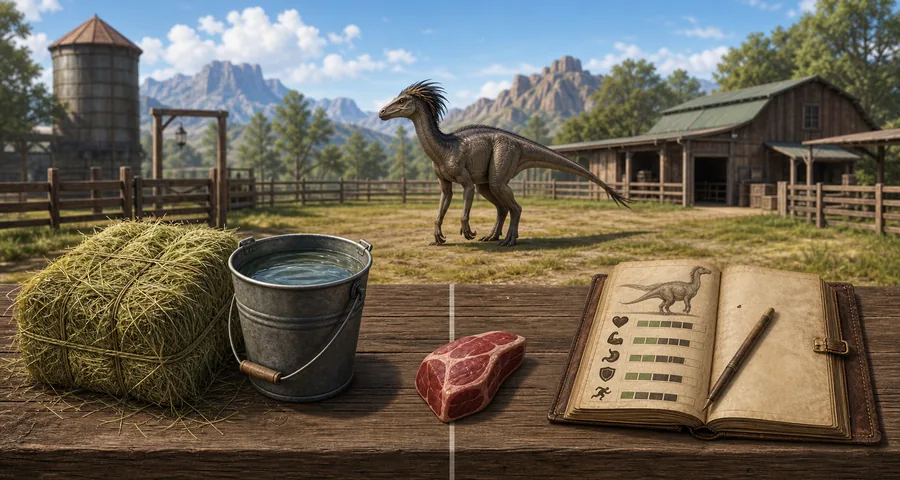
- Meat is situational: Use the meat guide for item-specific checks, but keep Dino behavior broader than one food.
- State matters: Age, fatigue, availability, and task locks can make a valid interaction look broken.
- Location matters: Test around the ranch or water context where the clue appeared.
- Version matters: Use Steam updates and community notes when older advice no longer matches the game.
Build planning
How Dino fits into breeding and DNA testing
Dino becomes a build question when you want to preserve, exaggerate, or stabilize a trait. Before touching CRISPR, decide what you are testing. Is Dino useful because of body size, movement, novelty, a challenge role, or breeding inheritance? Without that goal, every DNA edit becomes noise.
Use the DNA guide for helix workflow and the breeding guide for parent-choice logic. This Dino page should sit between them: it helps you decide whether a Dino trait deserves a dedicated breeding line, a novelty branch, or only a one-off experiment. Keep a normal baseline horse and a Dino test copy so failures do not damage your main stable.
- Define the role: Race, sumo, circus, breeding donor, and novelty builds require different tradeoffs.
- Keep a baseline: Compare Dino tests against a known horse instead of judging from appearance alone.
- Change one variable: Edit one DNA segment or test one parent pairing before drawing conclusions.
- Promote only stable results: Move a Dino line into the main stable only after it improves a clear goal.
Boundary
What not to do when a Dino search result looks tempting
Do not treat Dino as a reason to leave the official Steam install path. Pages that promise a free Dino build, unlocked creature, APK, SteamRip copy, key generator, or no-Steam installer are not solving the creature question. They are turning gameplay curiosity into download risk.
Also avoid creating a new page for every related phrase. “Horsey Game DNA codes” already belongs to the DNA guide, “Horsey Game meat” belongs to the meat guide, and “why can’t I race” belongs to the race troubleshooting guide. Dino deserves its own page only because the intent is an identifiable creature/build topic that those pages can support with links.
- No unofficial installers: Use Steam for files, updates, support, and refund context.
- No blind DNA pastes: Dino builds should be tested with notes, not copied as magic strings.
- No intent mixing: Keep download, food, racing, and DNA topics on their best-matching pages.
Decision table
How to classify Dino-related searches
Use this table to decide whether a Dino keyword deserves this page, an existing support section, an FAQ answer, an internal link, or no action.
| Keyword or symptom | Likely intent | Best action |
|---|---|---|
| dino horsey game | Creature-specific guide intent | Use this page as the main target. |
| horsey game dino | Same Dino creature/build intent | Use as a natural variant and internal-link anchor. |
| horsey game dna codes | CRISPR and genome editing | Keep on /dna-codes/; mention only when Dino testing needs DNA workflow. |
| horsey game meat | Food or creature feeding problem | Keep on /meat-guide/; link when Dino feeding checks involve meat. |
| why cant i race in horsey game | Race access or state troubleshooting | Keep on /race-not-working/; link only if Dino state blocks readiness. |
| horsey game steamrip / apk | Unsafe download intent | Do not target as a guide topic; warn and point to Steam safety page. |
Workflow
Safe Dino testing workflow
- Record the source clue Write down whether Dino came from a ranch prompt, creature result, wiki note, video, or breeding experiment.
- Test the current context Return to the closest ranch, pen, water, shop, or marker and test one low-cost interaction.
- Separate food from DNA Use feeding checks for item behavior and DNA checks only when you are changing inheritance or build traits.
- Keep a baseline copy Compare Dino results against a normal horse or an untouched save note so you know what changed.
- Promote or discard the line Keep Dino as a main build only when it solves a clear goal; otherwise leave it as a novelty branch.
FAQ
Dino Horsey Game FAQ
Sources
Official and supporting sources
- Official Horsey Game Steam page - Used for official platform, developer, media, and safe install context.
- Horsey Game Wiki Dino page - Checked as a community entity reference for Dino-specific intent; local article uses original explanatory copy and generated editorial visuals.
- Horsey Game CRISPR Lab Tutorial - Used to keep DNA and CRISPR workflow separate from the Dino creature intent.